When the desert gives its golden fruit
A new harvest year in Israel. Between biblical promise, desert sand, and millennia-old tradition, our fresh olive oil is born.
Dear friends of Israel,
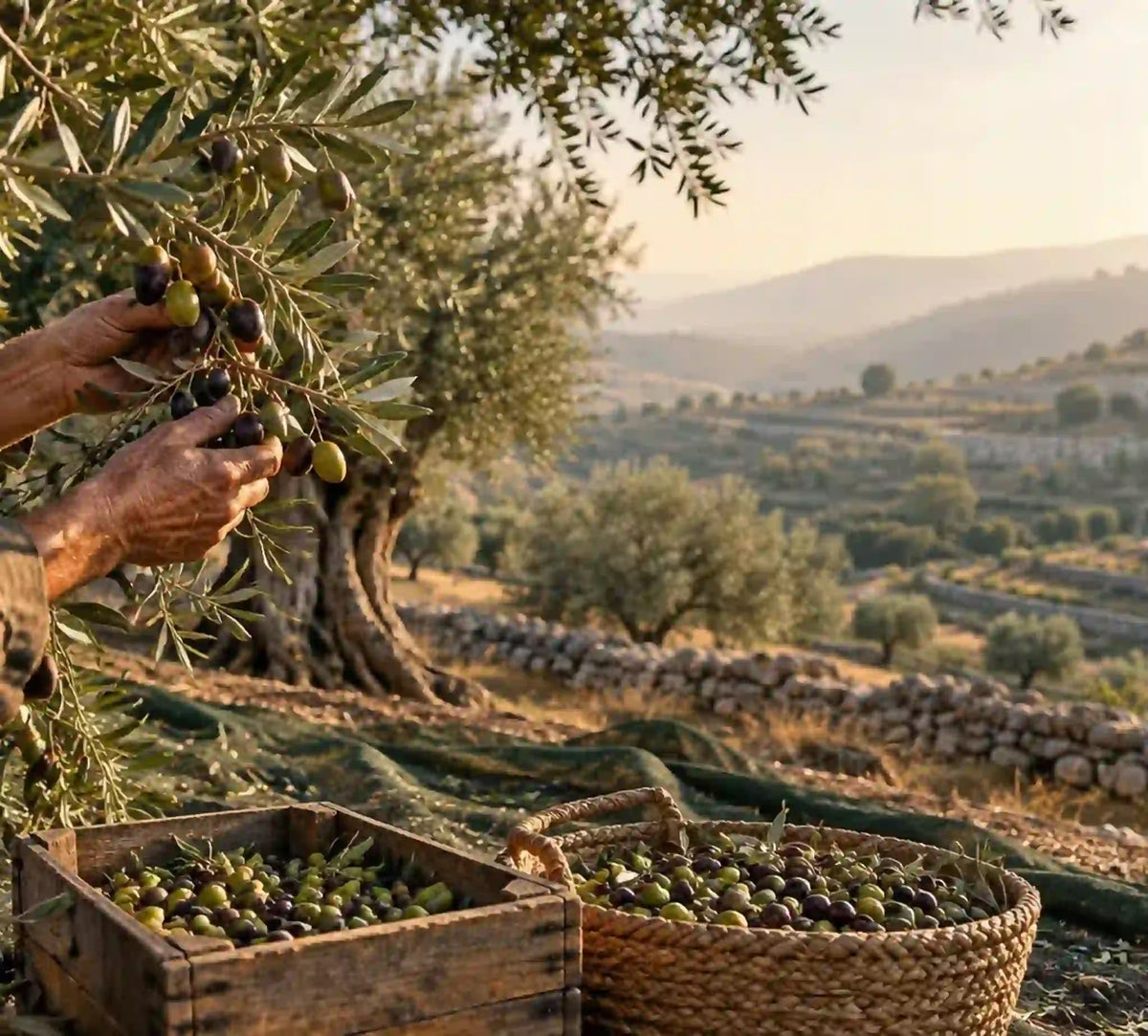
in these weeks, the olive harvest has begun for us, in the middle of the desert near Nitzana, in southern Israel. The first rains are behind us. The Feast of Booths has passed. The days are getting shorter, the nights in the desert cooler. And a small miracle is happening on our olive trees: the green fruit is slowly turning brown, purple, and finally deep black.
The olive harvest in Israel is also frequently making international headlines these weeks. Especially in Judea and Samaria, the biblical heartland, the media report on political tensions and clashes between Jews and Palestinians. In doing so, it is easy to forget what a wonderful sight the ancient olive trees are in this unique landscape. For thousands of years, they have shaped the land of the Bible – and today, they even grow where you would least expect them.
Olive harvest in the Negev desert: Everything is different here
It is time again for fresh olive oil! Anyone who has once harvested olives in the desert knows that everything is different here. The dry soil, the intense sun, the cool nights, and the precious irrigation shape the life of our trees. Every drop of oil is the result of patience, hard work, and the unique nature of this landscape.
Our groves are located near the Egyptian border, not far from Kadesh Barnea – the place where the people of Israel camped during their desert wanderings. Where the children of Israel once trekked through sand and stone, green rows of olive trees stand today.
Around 6,000 liters of olive oil – cold-pressed right on site
This year, we can be especially grateful. Our trees are bearing abundant fruit, and we expect a harvest from which we hope to produce around 6,000 liters of fine olive oil. The freshly harvested olives are cold-pressed right on site. In this way, we want to preserve their freshness, their natural flavor, and the valuable properties of the oil as best as possible.
Cold-pressed means: the olives are washed, ground into a paste, stirred slowly, and then the oil is gently separated from the fruit water and pulp – without any heat and without additives. Because our press stands right next to the trees, there are only a few steps between the tree and the bottle. This is exactly how our Kanaan olive oil “Aviel-Shalom” is made, an extra virgin olive oil from the desert.
The olive tree – a biblical sign of blessing
Moses himself described the promised land as a land full of good gifts: “a land where wheat, barley, vines, fig trees, and pomegranates grow, a land where there are olive trees and honey” (Deuteronomy 8:8, Luther Bible 2017). In the Bible, the olive tree represents endurance, fertility, light, and blessing. Kings were anointed with olive oil, the menorah in the sanctuary was fueled by it, and food was prepared with it. The Hebrew word “Mashiach” – Messiah – means nothing other than “the Anointed One.” And even today, these trees connect us to the history of the land of Israel.
When we stand among the olive trees in Nitzana, we feel this connection especially strongly. Precisely where the desert seemingly knows only sand and stones, fruit grows that connects us with a millennia-old tradition. The desert does not only bloom. It also gives us its oil.
How to recognize fresh olive oil
Fresh olive oil from the new harvest tastes different from oil that has been sitting on the shelf for a long time. A few simple signs can help you:
- The aroma: Fresh oil smells fruity and green – like freshly cut grass, green herbs, or green tomatoes.
- The taste: A slight bitterness on the tongue and a peppery sting in the throat are completely normal in young, extra virgin olive oil. They become milder with the months.
- The origin: Good olive oil reveals where it comes from and from which harvest year it hails.
It is best to taste it plain: a few drops on a spoon or on a piece of bread. This is how you can taste the desert most clearly.
How to properly store your olive oil
Olive oil does not like three things: light, heat, and air. Therefore, place the bottle in a dark, cool place – not directly next to the stove and not on a sunny windowsill. The refrigerator is not necessary; the oil can become cloudy there. Close the bottle tightly after every use and enjoy the oil within a few months after opening, while it still tastes its freshest.
Enjoy olive oil like in Israel
In Israel, olive oil is not only in the kitchen, but also right on the table. The easiest way to enjoy it is as we know it: dip fresh bread or pita in olive oil, and then in za’atar, the Israeli herb mixture. A generous splash of oil also belongs on hummus, on labneh, or over a classic Israeli salad of finely diced cucumbers and tomatoes. And for those who like it very simple, bread, oil, and a pinch of salt are all you need.
A piece of Israel for your table
With our olive oil, we want to offer you more than a high-quality natural product. We want to share a piece of our homeland with you: the sun of the Negev desert, the work of our hands, the history of Israel, and the joy of a blessed harvest.
When you order our olive oil, you are also supporting our agricultural work in Israel and helping to keep this special connection between people, land, and biblical history alive.
Bring the taste of Israel home – with our freshly cold-pressed olive oil from the desert of Nitzana.
We look forward to you sharing this harvest with us!
Order olive oil from Israel now and support the new harvest!